
Local customers are important for every small business. Whether you run a restaurant, retail shop, salon, or service-based business, attracting customers from your surrounding area can help your business grow.
But how do people find local businesses today?
Most people search on Google before visiting a shop or contacting a service provider. They use searches like “best digital marketing agency near me” or “restaurants in Kochi.”
This is where Local SEO for small businesses becomes important.
Local SEO helps your business appear in relevant local search results and Google Maps. It makes it easier for nearby customers to discover your products and services.
In this guide, let’s explore 10 practical ways to improve local SEO and attract more local customers.
A strong local SEO strategy for small businesses can help improve online visibility, build customer trust, and attract more potential customers from nearby locations.
What Is Local SEO?
Local SEO (Local Search Engine Optimization) is the process of improving your online presence to attract customers from a specific geographical location.
For example, if someone searches for “best bakery in Kochi,” Google displays relevant local businesses based on their search query and location.
Local SEO helps businesses improve their visibility in:
- Google Search results
- Google Maps
- Local business listings
- Location-based searches
It is especially useful for small businesses that depend on customers from nearby areas.
Why Is Local SEO Important for Small Businesses?
Local SEO helps small businesses compete in their local market without depending entirely on paid advertising.
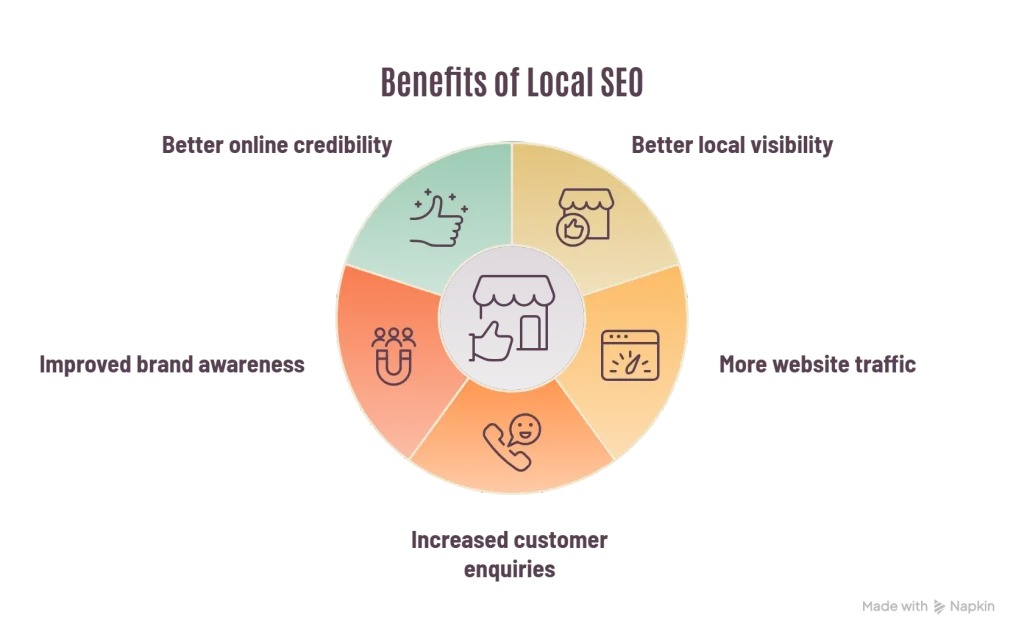
Here are some important benefits:
- Better local visibility: Helps your business appear when nearby customers search for your services.
- More website traffic: Brings relevant visitors who are interested in your products or services.
- Increased customer enquiries: Makes it easier for potential customers to contact your business.
- Improved brand awareness: Helps more people discover your business locally.
- Better online credibility: Positive customer reviews and accurate business information can build trust.
Now, let’s look at how you can improve your local SEO.
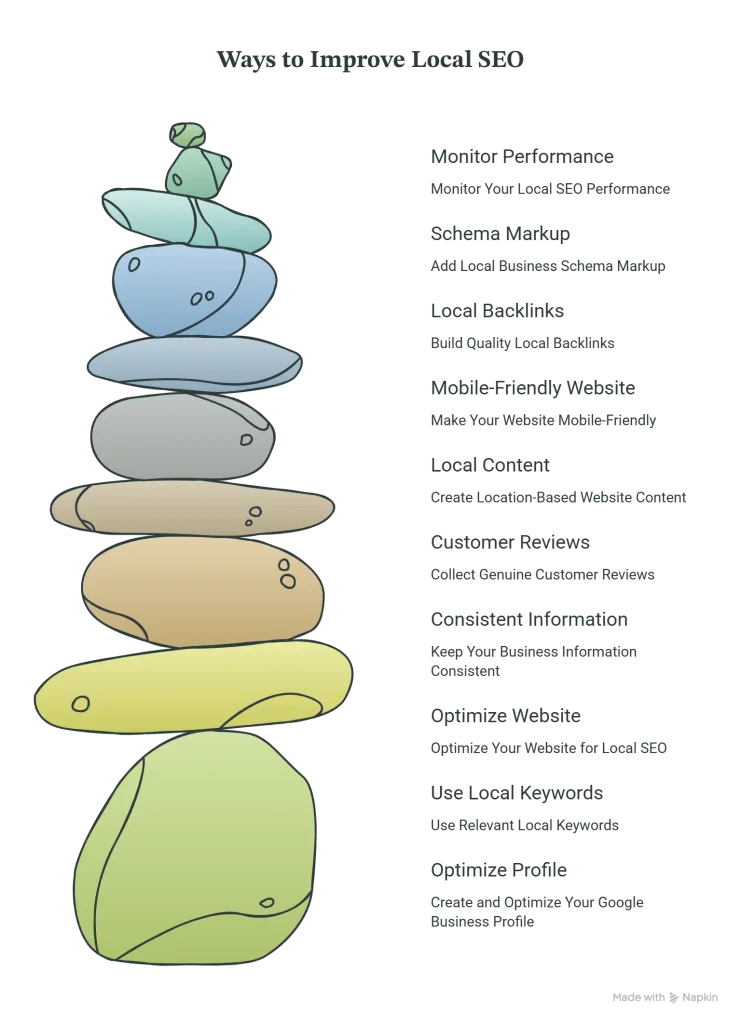
10 Ways to Improve Local SEO for Small Businesses
1. Create and Optimize Your Google Business Profile
Google Business Profile (GBP) is one of the most important tools for local SEO.
It allows your business to appear on Google Search and Google Maps.
To optimize your profile:
- Add your correct business name.
- Select the most relevant business category.
- Enter your business address and contact details.
- Add accurate working hours.
- Upload high-quality business photos.
- Write a clear business description.
- Keep your information updated.
A complete and accurate profile helps customers understand your business before contacting or visiting you.
2. Use Relevant Local Keywords
Keywords help Google understand what your business offers and where it operates.
Instead of targeting only general keywords, use location-based keywords.
For example:
- Digital marketing agency in Kochi
- Best bakery in Cherthala
- Web design services in Kerala
- Affordable SEO services in Kochi
Include relevant local keywords naturally in your website headings, page titles, descriptions, and content.
Avoid keyword stuffing because it can make your content difficult to read.
3. Optimize Your Website for Local SEO
Your website should clearly explain what your business offers and which locations you serve.
Make sure to:
- Add your business name and contact details.
- Mention your service locations naturally.
- Create dedicated service pages.
- Optimize page titles and meta descriptions.
- Make your website mobile-friendly.
- Improve website loading speed.
A well-optimized website makes it easier for both search engines and potential customers to understand your business.
4. Keep Your Business Information Consistent
Your business information should remain consistent across different online platforms.
This includes:
- Business name
- Address
- Phone number
These details are commonly called NAP information.
Make sure your information is accurate on your website, Google Business Profile, social media pages, and relevant business directories.
Inconsistent information can confuse customers and make it harder for search engines to identify your business correctly.
5. Collect Genuine Customer Reviews
Online reviews influence how potential customers perceive your business.
Positive reviews can improve customer confidence and make your business more attractive in local search results.
Encourage satisfied customers to share their genuine experiences.
You can improve your review strategy by:
- Asking customers for honest feedback.
- Sharing your Google review link.
- Responding politely to reviews.
- Addressing negative feedback professionally.
Never purchase fake reviews or offer incentives in exchange for positive ratings.
6. Create Location-Based Website Content
Publishing useful local content can help your business connect with people in your target area.
For example, a digital marketing agency in Kochi could publish articles about:
- Digital marketing trends in Kerala.
- SEO strategies for Kochi businesses.
- Online marketing tips for local shops.
- How small businesses can attract local customers.
Focus on providing useful information instead of repeating location keywords unnecessarily.
7. Make Your Website Mobile-Friendly
Many people use smartphones to search for nearby businesses.
If your website is difficult to use on mobile devices, visitors may leave without contacting you.
To improve mobile usability:
- Use responsive website design.
- Make text easy to read.
- Keep buttons easy to tap.
- Avoid unnecessary pop-ups.
- Ensure contact details are accessible.
- Improve mobile loading speed.
A smooth mobile experience makes it easier for potential customers to interact with your business.
8. Build Quality Local Backlinks
Backlinks are links from other websites that point to your website.
Local backlinks can help improve your website’s authority and online visibility.
You can build local backlinks by:
- Getting listed in relevant local business directories.
- Collaborating with nearby businesses.
- Participating in local events.
- Publishing useful guest articles.
- Working with relevant local organizations.
Focus on quality and relevance rather than collecting as many links as possible.
9. Add Local Business Schema Markup
Schema markup is structured data that helps search engines understand information about your business.
LocalBusiness schema can provide details such as:
- Business name
- Address
- Phone number
- Opening hours
- Website URL
- Business location
Adding accurate structured data can help search engines interpret your business information.
However, schema markup does not guarantee special search result appearances or higher rankings.
10. Monitor Your Local SEO Performance
Local SEO requires regular monitoring and improvements.
Use these tools to understand your performance:
- Google Search Console: Monitor search impressions, clicks, queries, and website indexing.
- Google Analytics 4: Understand website visitors and their behaviour.
- Google Business Profile Performance: Review available profile interactions and customer engagement metrics.
- Google PageSpeed Insights: Check website performance and loading speed.
Review your results regularly and identify opportunities to improve your local search visibility.
Common Local SEO Mistakes to Avoid
While improving local SEO, avoid these common mistakes:
- Using incorrect business information.
- Ignoring customer reviews.
- Targeting irrelevant local keywords.
- Creating duplicate location pages with little useful content.
- Neglecting mobile optimization.
- Buying low-quality backlinks.
- Leaving your Google Business Profile outdated.
Avoiding these mistakes can help you build a stronger and more reliable local online presence.
Conclusion
Local SEO is an important part of digital marketing for small businesses. It helps nearby customers discover your business when they search for relevant products and services.
By optimizing your Google Business Profile, targeting relevant local keywords, collecting genuine reviews, and improving your website, you can build better local visibility.
Remember, local SEO takes time and consistent effort. Start with the basics, monitor your performance, and keep improving your online presence.
If you want to improve your business visibility and reach more local customers, investing in the right SEO strategy can make a difference.
Implementing the right Local SEO for Small Businesses techniques can help your business reach the right audience and build a stronger presence in local search results.
Need help improving your online presence? Sahil Marketing can help you build a stronger digital marketing strategy for your business.
Frequently Asked Questions (FAQs)
1. What is local SEO in digital marketing?
Local SEO is the process of optimizing a business’s online presence to attract customers from specific geographical locations through search engines.
2. Is local SEO important for small businesses?
Yes. Local SEO helps small businesses become more visible to nearby customers who are actively searching for their products or services.
3. Is Google Business Profile free?
Yes. Google Business Profile is a free tool that allows eligible businesses to manage how they appear on Google Search and Google Maps.
4. How long does local SEO take to show results?
Local SEO results vary depending on competition, location, website quality, and optimization efforts. It generally requires consistent work over time.
5. Can a small business rank on Google without a website?
Yes. An eligible business can appear in Google Maps and local search results through its Google Business Profile without having a website. However, a website can provide additional opportunities to showcase services and attract customers.