
Social media marketing strategy is essential for small businesses that want to build brand awareness, connect with customers, and increase sales. Simply posting pictures or sharing promotional offers is not enough. Businesses need a clear plan to reach the right audience and achieve meaningful results.
Whether you run a small shop, a startup, or an online business, social media can help you reach potential customers without spending a huge amount of money.
In this guide, let’s explore how to create an effective social media marketing strategy for your small business.
1. Set Clear Social Media Marketing Goals
Before creating content, decide what you want to achieve.
Your goals will guide your content and marketing activities.
Some common social media marketing goals include:
- Brand Awareness: Help more people discover your business.
- Website Traffic: Bring visitors from social media to your website.
- Lead Generation: Find potential customers interested in your services.
- Customer Engagement: Build relationships through comments, messages, and shares.
- Sales Growth: Encourage customers to purchase your products or services.
Start with two or three realistic goals. Make sure you can measure your progress.
2. Identify Your Target Audience
Not everyone on social media is your potential customer. You need to understand who you want to reach.
Consider these factors:
- Age and location.
- Interests and hobbies.
- Occupation and income level.
- Problems they want to solve.
- Social media platforms they use.
For example, a local clothing store may target young adults interested in fashion and lifestyle.
Understanding your audience helps you create content that matches their interests and needs.
3. Choose the Right Social Media Platforms
You don’t need to be active on every social media platform. Focus on the platforms where your target audience spends the most time.
Here are some popular platforms and how businesses can use them.
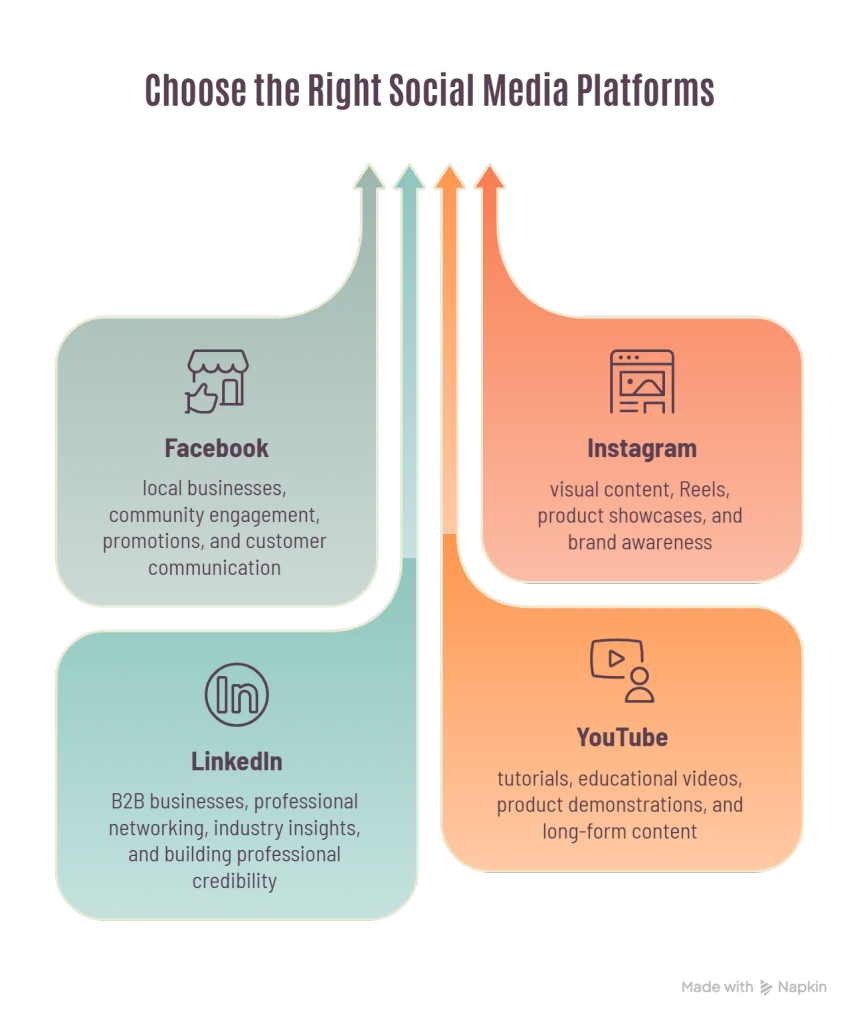
Facebook is useful for local businesses, community engagement, promotions, and customer communication.
Instagram works well for visual content, Reels, product showcases, and brand awareness.
LinkedIn is ideal for B2B businesses, professional networking, industry insights, and building professional credibility.
YouTube
YouTube helps businesses share tutorials, educational videos, product demonstrations, and long-form content.
Tip: Start with one or two platforms. Build a consistent presence before expanding to others.
4. Create Valuable and Engaging Content
Content is the foundation of a successful social media marketing strategy.
Your posts should provide value instead of constantly promoting your products or services.
Here are five content ideas for small businesses:
- Educational Content: Share useful tips, tutorials, and industry knowledge.
- Behind-the-Scenes Content: Show how your business operates.
- Customer Testimonials: Share genuine customer feedback and experiences.
- Promotional Content: Highlight products, services, discounts, and offers.
- Entertaining Content: Create relatable posts, stories, and short videos.
Try to maintain a healthy balance between educational, entertaining, and promotional content.
5. Build a Social Media Content Calendar
Posting randomly makes it difficult to maintain consistency.
A social media content calendar helps you plan what to publish and when to publish it.
For example:
| Day | Content Type |
|---|---|
| Monday | Educational post |
| Tuesday | Instagram Reel |
| Wednesday | Customer testimonial |
| Thursday | Industry tips |
| Friday | Promotional post |
| Saturday | Behind-the-scenes |
| Sunday | Engagement post |
You don’t have to post every day. Choose a realistic schedule that you can maintain.
Planning content in advance also saves time and reduces last-minute stress.
6. Use Hashtags and Keywords Strategically
Hashtags and keywords help people discover your content.
Use relevant keywords in your captions, profile description, and content wherever they fit naturally.
For example, a digital marketing agency in Kochi might use keywords such as:
- Digital marketing services.
- Social media marketing.
- Digital marketing agency in Kochi.
- SEO services in Kerala.
You can also use relevant hashtags to improve content discoverability.
Avoid using too many unrelated hashtags. Focus on relevance rather than quantity.
7. Engage With Your Audience Regularly
Social media marketing is not just about publishing content. It is also about building relationships.
Make time to:
- Reply to comments.
- Answer direct messages.
- Respond to customer questions.
- Interact with relevant industry accounts.
- Encourage followers to share their opinions.
- Thank customers for their feedback.
Regular engagement helps build trust and creates a stronger connection between your business and its audience.
8. Use Paid Social Media Advertising
Organic content helps you build an audience, but paid advertising can help you reach more potential customers.
Platforms such as Facebook and Instagram offer advertising options that allow businesses to target people based on location, interests, age, and other factors.
Small businesses can use paid advertising for:
- Promoting products and services.
- Generating leads.
- Increasing website traffic.
- Promoting special offers.
- Reaching new audiences.
Start with a manageable budget. Test different creatives and audiences before increasing your spending.
9. Track Your Social Media Performance
Publishing content without checking the results makes it difficult to understand what works.
Use platform analytics to monitor important performance indicators.
Some useful social media metrics include:
- Reach: Number of unique people who see your content.
- Impressions: Total number of times your content is displayed.
- Engagement Rate: How people interact with your content.
- Link Clicks: Number of clicks on links in your posts.
- Follower Growth: Changes in your audience size.
- Conversions: Actions such as enquiries, registrations, or purchases.
Review your performance regularly. Identify which content receives the most engagement and use those insights to improve your strategy.
10. Stay Consistent and Improve Your Strategy
Social media marketing takes time. You may not see significant results immediately.
The key is to stay consistent, understand your audience, and improve your approach based on performance.
Follow these simple practices:
- Maintain a consistent posting schedule.
- Experiment with different content formats.
- Follow relevant industry trends.
- Learn from your competitors.
- Monitor audience feedback.
- Update your strategy when necessary.
Remember, successful social media marketing is about building long-term relationships, not just collecting followers.
Conclusion
A well-planned social media marketing strategy can help small businesses increase brand awareness, connect with potential customers, and grow their online presence.
Start by setting clear goals, understanding your target audience, choosing the right platforms, and creating valuable content. Combine consistent posting with audience engagement and performance tracking to improve your results.
You don’t need a huge marketing budget to get started. You need a clear strategy, useful content, and consistency.
Ready to grow your business online? Explore professional digital marketing solutions from Sahil Marketing and take the next step towards building a stronger online presence.